
Snoqualmie, Washington, is an incredibly picturesque city, offering a unique lifestyle at the base of the Cascades.
This charming city is a planned community known for its breathtaking mountain views, family-friendly neighborhoods, and easy access to the Eastside tech corridor.
With excellent schools, plenty of green space, and a small-town feel just 30 miles from Seattle, it’s easy to see why Snoqualmie has become one of the most desirable places to live in Washington.
This guide provides a comprehensive breakdown of Snoqualmie Washington cost of living, detailing housing costs, daily expenses, and the income needed to live comfortably in this city.

The Overall Financial Picture
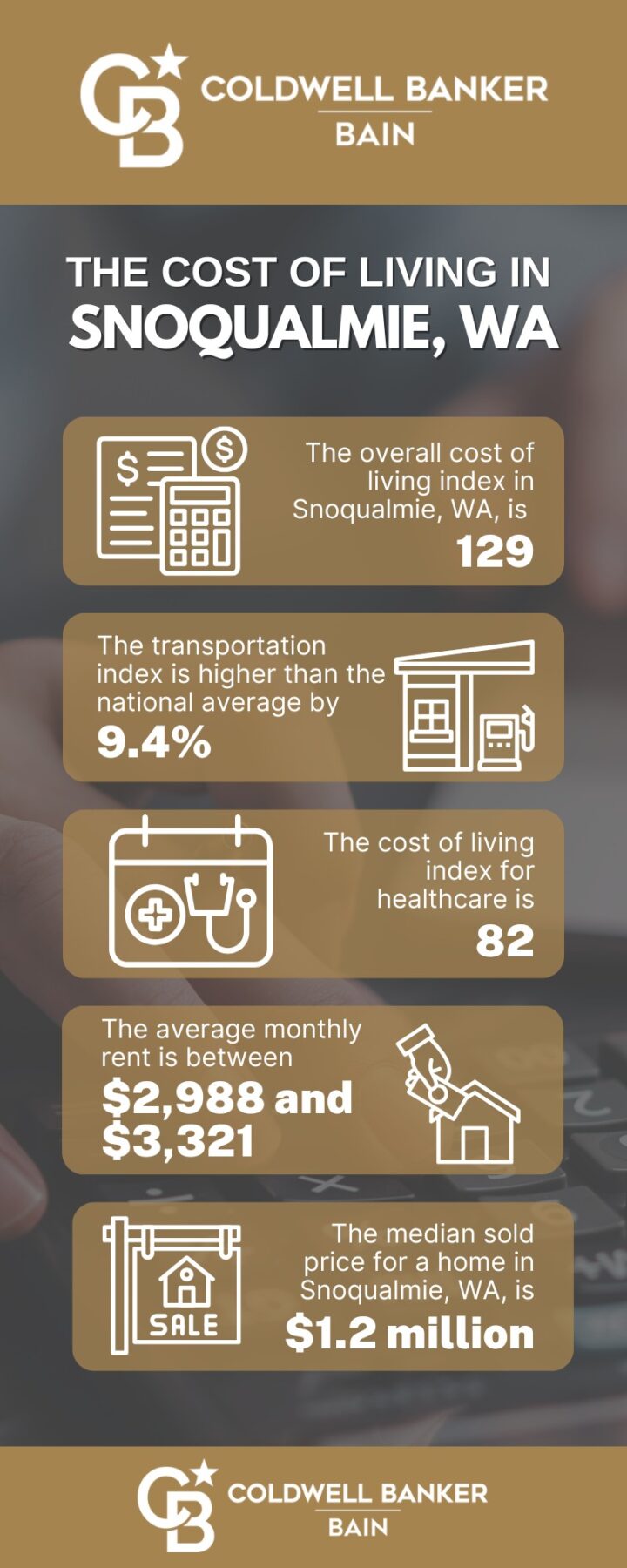
If you’re considering a move to Snoqualmie, be prepared: the overall Snoqualmie WA cost of living is about 29% higher than the national average. This means you’ll pay more for just about everything, from groceries to housing, compared to most other parts of the country.
Housing is the biggest factor driving up the cost of living. Homes are in high demand, and that keeps prices elevated. But housing isn’t the only expense you’ll notice — transportation, food, and utilities also come at a premium compared to national averages.
One bright spot is that Washington State has no income tax. This can save households thousands of dollars each year, offsetting some of the higher costs of living. For high-income earners, this can make a big difference and is one reason many choose to settle in Snoqualmie.
Housing: The Largest Expense
As of August 2025, the median sold price for a home in Snoqualmie is around $1.2 million, with the median listing price closer to $1.3 million. This places Snoqualmie firmly in the “luxury market” category for most buyers.
Although Snoqualmie remains competitive, there’s been a slight cooling trend compared to the frenzied market of the past few years. Homes are spending about 21 days on the market — still fast, but giving buyers a little more breathing room to make decisions.
If you’re not ready to buy, renting isn’t exactly cheap either. Average rents range between $2,988 and $3,321 per month, which is more than 40% higher than the national average. Whether you choose a townhouse or an apartment, expect premium pricing.
Despite already-high prices, home values continue to appreciate year-over-year. For buyers able to afford it, this makes owning a home here a potentially strong long-term investment.

What Salary You'll Need to Live Comfortably
To live comfortably in Snoqualmie as a single person, you’d need an estimated monthly income of about $3,200, or $38,400 per year — but that’s just to cover basic needs. In reality, if you plan to rent the average apartment, most estimates suggest you’d need an annual salary closer to $92,000 to avoid being cost-burdened.
For families, the numbers climb quickly. Monthly expenses for a family of four average over $7,047, meaning a household income would need to be well above that to live comfortably — and significantly more if homeownership is the goal.
The median household income in Snoqualmie sits around $131,000, which is high compared to the national median. However, given the elevated home prices, many families still feel stretched. Those without significant equity or dual incomes may find affordability to be a real challenge.

Daily Living Expenses Breakdown
Utilities
Utility costs in Snoqualmie tend to run higher than the national average.
The overall energy and utility expenses in Snoqualmie are about 7.3% above the U.S. average, which can add up quickly for households—especially when paired with the city’s higher housing costs.
Food & Groceries
Groceries cost slightly more than in other areas, thanks to the city’s location and higher distribution costs. Dining out is also more expensive, with many restaurants catering to higher-income residents.
Transportation
Transportation expenses are about 9.4% higher than the national average. Most residents rely on personal vehicles for commuting, which means budgeting for gas, car payments, insurance, and maintenance.
Healthcare
Here’s a bit of good news: healthcare costs in Snoqualmie are about 18% lower than the national average. This helps balance out some of the more expensive aspects of daily life.
The Snoqualmie Lifestyle Advantage
Families are drawn to Snoqualmie in large part because of its excellent schools. The Snoqualmie Valley School District consistently receives high marks, offering strong academic programs and extracurricular activities that make it a standout in the region.
For those who love the outdoors, Snoqualmie is paradise. Residents enjoy hiking, mountain biking, and skiing just minutes from their front doors. The city is home to stunning natural landmarks, including the iconic Snoqualmie Falls.
Snoqualmie’s thoughtful planning means you’ll find parks, trails, and community spaces throughout the city.
Whether you’re meeting neighbors at the local farmers market or enjoying one of the many seasonal events, there’s always something happening that brings people together.
Conclusion
Breaking down the cost of living in Snoqualmie, WA, reveals that its higher price tag is directly tied to its exceptional quality of life, excellent schools, and breathtaking surroundings.
Yes, living here comes with significant financial hurdles — but for those who can manage it, the reward is a safe, scenic, and vibrant place to call home.
Thinking of making a move? Feel free to give me a call today at 206-590-6316 or email me at amanda.wright@cbrealty.com to schedule an appointment.
Frequently Asked Questions
Yes. Snoqualmie’s cost of living is roughly 29% higher than the national average, driven mostly by housing costs.
As of 2025, the median sold price is around $1.2 million, with the median listing price closer to $1.3 million.
A single person would likely need $92,000 annually to rent comfortably, while a family of four needs significantly more — especially if purchasing a home.
Snoqualmie is often slightly more expensive than Seattle in terms of housing, but offers a quieter, suburban lifestyle.
Pros include excellent schools, beautiful surroundings, and a strong sense of community. Cons are the high housing costs and longer commutes if you work in Seattle.
While it leans toward a seller’s market, recent cooling trends have given buyers a bit more leverage.
Popular neighborhoods include Snoqualmie Ridge, Deer Park, and Aster Creek, each offering a variety of home styles and amenities.